Experiential Marketing
The Psychology Behind Experiential Marketing: Why People Remember Experiences, Not Adverts
13 August 2026
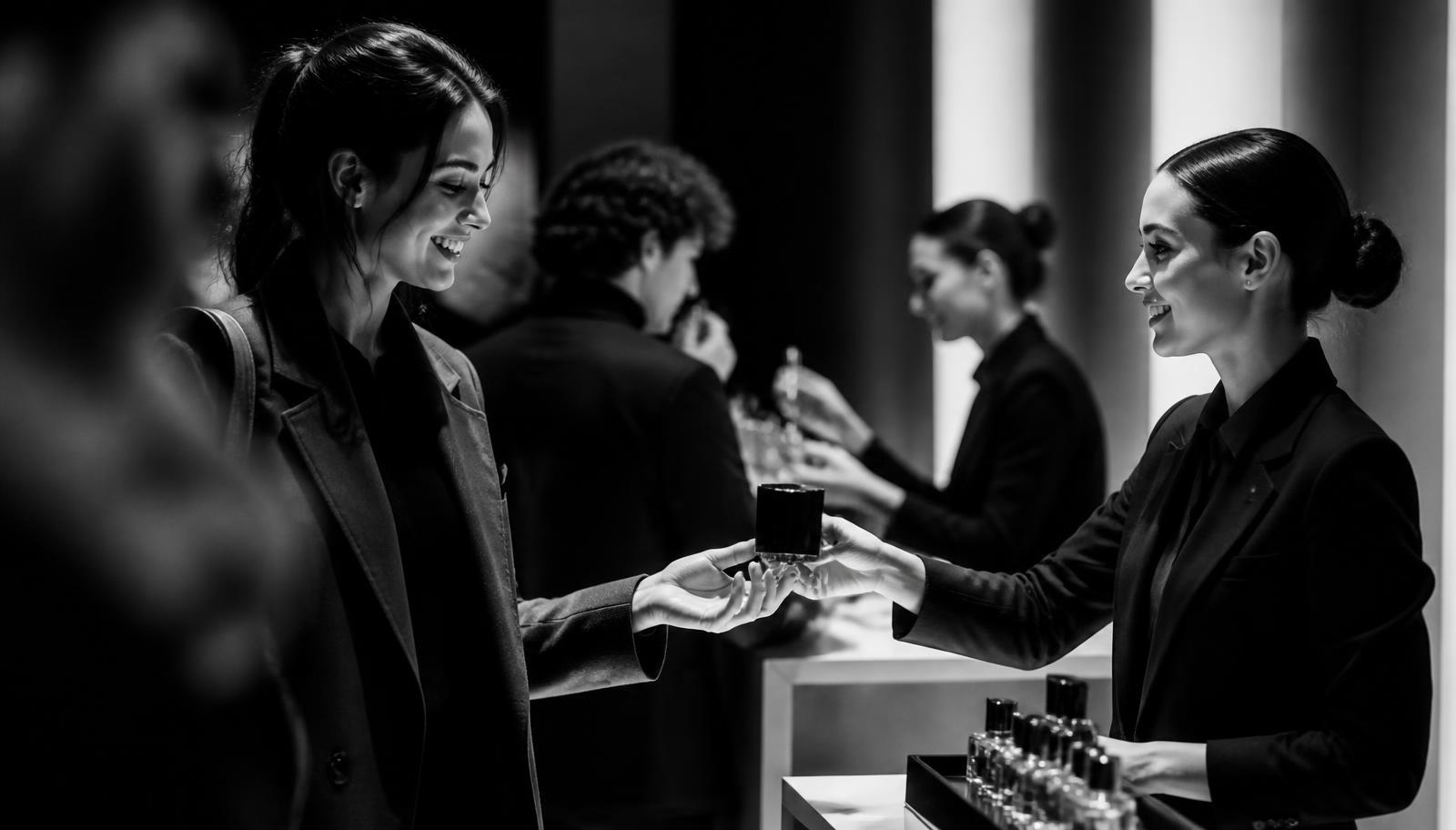
How emotion, human connection, participation and great Brand Ambassadors turn ordinary campaigns into unforgettable brand experiences.
People forget adverts. They remember how something made them feel.
That single truth sits at the heart of every great experiential marketing campaign. A billboard is seen. A pre-roll is skipped. But a moment of genuine human connection — a conversation, a taste, a demonstration, a shared laugh with a Brand Ambassador who actually cared — is stored somewhere much deeper.
This is the psychology of experiential marketing: the reason a well-run brand activation can outperform months of paid media, and why the people delivering it matter more than the set that surrounds them.
Why Experiential Marketing Works
Traditional advertising asks people to watch. Experiential marketing invites them to take part.
Psychologically, those are two very different acts. Passive viewing engages a narrow slice of attention. Participation engages the senses, the body and the emotions all at once — and memory is built from exactly those ingredients.
When someone tastes a product, holds it, asks a question and receives a warm, human answer, they are not consuming a message. They are forming an experience. Experiences are encoded richly, recalled easily and retold often.
That is why experiential events, product sampling, field marketing and live events consistently produce stronger recall than experiential advertising delivered through a screen. The brand stops being a logo and becomes a memory with a face attached to it.
Emotion Is the Real Currency of Brand Experience
Decision-making is emotional first and rational second. We feel, then we justify.
Every brand experience is therefore an emotional transaction. A confident, generous, well-briefed team makes people feel welcome, respected and slightly delighted. A disengaged team — however beautiful the installation — makes people feel processed.
Emotion is also what makes measurement possible later. Positive feeling drives dwell time, dwell time drives conversation, conversation drives lead capture, and lead capture drives sales attribution. The commercial chain begins with a feeling.
The stand is the stage. The people are the performance. Audiences only ever remember the performance.
The Power of Participation
Psychologists call it the generation effect: we remember what we help create far better than what we are simply shown.
Participation can be small. Choosing a flavour. Customising a sample. Pressing the button. Being handed the tool rather than watching a demonstration. Each of these transfers a little ownership to the consumer, and ownership is sticky.
The most effective experiential marketing campaigns build in at least one moment where the guest does something rather than receives something. That moment is the memory anchor the entire activation will be recalled by.
Personalisation Makes People Pay Attention
Attention sharpens the instant something becomes about us.
A Brand Ambassador who asks a question and adjusts the conversation accordingly is doing something no media buy can replicate: tailoring the message in real time. Personalisation signals effort, and effort signals value.
This is where trained promotional staff separate a premium activation from a leaflet handout. Reading a person quickly, matching tone and offering the right product for the right reason is a skill — and it is the skill that turns consumer engagement into genuine customer engagement.
Why Brand Ambassadors Matter So Much
In a live environment, the brand is not the stand. The brand is whoever is standing in front of you.
Brand Ambassadors carry the entire brand experience in their posture, energy, product knowledge and generosity of attention. Guests will forgive a queue. They will not forgive indifference.
This is exactly why we treat event staffing and event recruitment as a strategic decision rather than a logistical one. If you are planning a campaign, our approach to experiential marketing staffing starts with the people, because the people are the product of the day. It is also why we wrote a full guide on how to recruit the best promotional staff for brands running their own selection process.
The Psychology of the First Five Seconds
Judgement is fast. Within roughly five seconds, a passer-by has decided whether an activation is worth their time.
Those five seconds are won by eye contact, open body language and an opening line that offers value rather than demands attention. "Would you like to try this?" outperforms "Can I tell you about our brand?" every single time, because one gives and the other takes.
Great event staff are trained on the approach, not just the script. The approach is where footfall becomes engagement.
Why Surprise Creates Stronger Memories
The brain prioritises the unexpected. Novelty triggers a small dopamine response, and that chemical marker makes the surrounding moment easier to recall.
Surprise does not require spectacle. An unexpectedly generous sample size, a personalised note, a genuinely funny team, a small upgrade nobody asked for — these micro-surprises land harder than expensive scenography, and they cost far less.
Immersive experiences work best when the surprise is human rather than purely technological.
From Engagement to Brand Loyalty
Loyalty is not bought with discounts. It is built through repeated positive emotion.
A single strong brand activation creates familiarity and warmth. Consistency across campaigns turns that warmth into preference, and preference into brand loyalty. Reciprocity plays its part too: when a brand gives something freely and pleasantly, people feel a quiet obligation to give back — with attention, with a follow, and eventually with a purchase.
Our view on why service quality underpins all of this is set out in Customer Service Is More Than a Department.
The Experience Doesn't End When the Event Ends
Memory is rebuilt every time it is recalled, which means the days after an activation are as important as the day itself.
A follow-up email, a piece of user-generated content resurfacing on social, a QR-captured offer arriving at the right moment — each one reactivates the original feeling and strengthens it.
Poor planning is what usually breaks this chain, which is why we argue that planning creates performance long before anyone arrives on site.
And This Is Where Measurement Matters
Emotion is not an excuse to avoid numbers. It is the thing the numbers should be tracking.
Sensible experiential marketing KPIs include conversations held, dwell time, samples distributed, lead capture rate, content generated, redemption rate and post-event sales attribution. Set them before the brief goes out, not after the pack-down.
We covered the full framework in The ROI of Experiential Marketing, including how to connect marketing activation spend to commercial outcomes.
Why Staff Playbook Starts With People
Every element of an activation can be bought twice. The team cannot.
Staff Playbook exists because UK experiential marketing has spent years investing in build quality while treating staffing as a last-minute line item. We flipped that. We recruit, vet, brief and lead teams who understand that they are not handing out product — they are the reason someone remembers the brand next month.
If you are looking for work rather than staff, you can become a Brand Ambassador and browse flexible event jobs across the UK.
The Future of Experiential Marketing Is Human
Technology will keep improving. Screens will get bigger, personalisation engines smarter, immersive experiences more convincing.
None of it replaces the effect of a real person being genuinely pleased to see you. As digital environments become more automated, the human moment becomes rarer — and rarity is exactly what makes a brand experience memorable.
The brands winning in 2026 are not the ones spending the most on production. They are the ones spending the most care on people.
The Psychology Is Simple
People remember how you made them feel, who made them feel it, and whether it felt genuine.
Everything else — the structure, the tech, the media value — is amplification. Get the human moment right and the amplification works. Get it wrong and no budget can save it.
Key Takeaways
- Participation beats observation: people remember what they help create.
- Emotion drives decisions; every brand activation is an emotional transaction first.
- The first five seconds decide whether footfall becomes consumer engagement.
- Brand Ambassadors are the brand on the day — staffing is strategy, not logistics.
- Surprise and personalisation encode stronger, longer-lasting memories.
- Post-event follow-up reactivates and strengthens the original feeling.
- Set experiential marketing KPIs before the campaign, and tie them to sales attribution.
About the Author
James Blogg is the Founder of Staff Playbook and Feet On The Street Co, with over a decade spent delivering experiential marketing campaigns, brand activations and large-scale event staffing across the UK. He writes about people, performance and the craft behind memorable brand experiences.