Staff Playbook Journal
AI Integrated Experiences: How Artificial Intelligence is Transforming Experiential Marketing Across the UK
3 July 2026
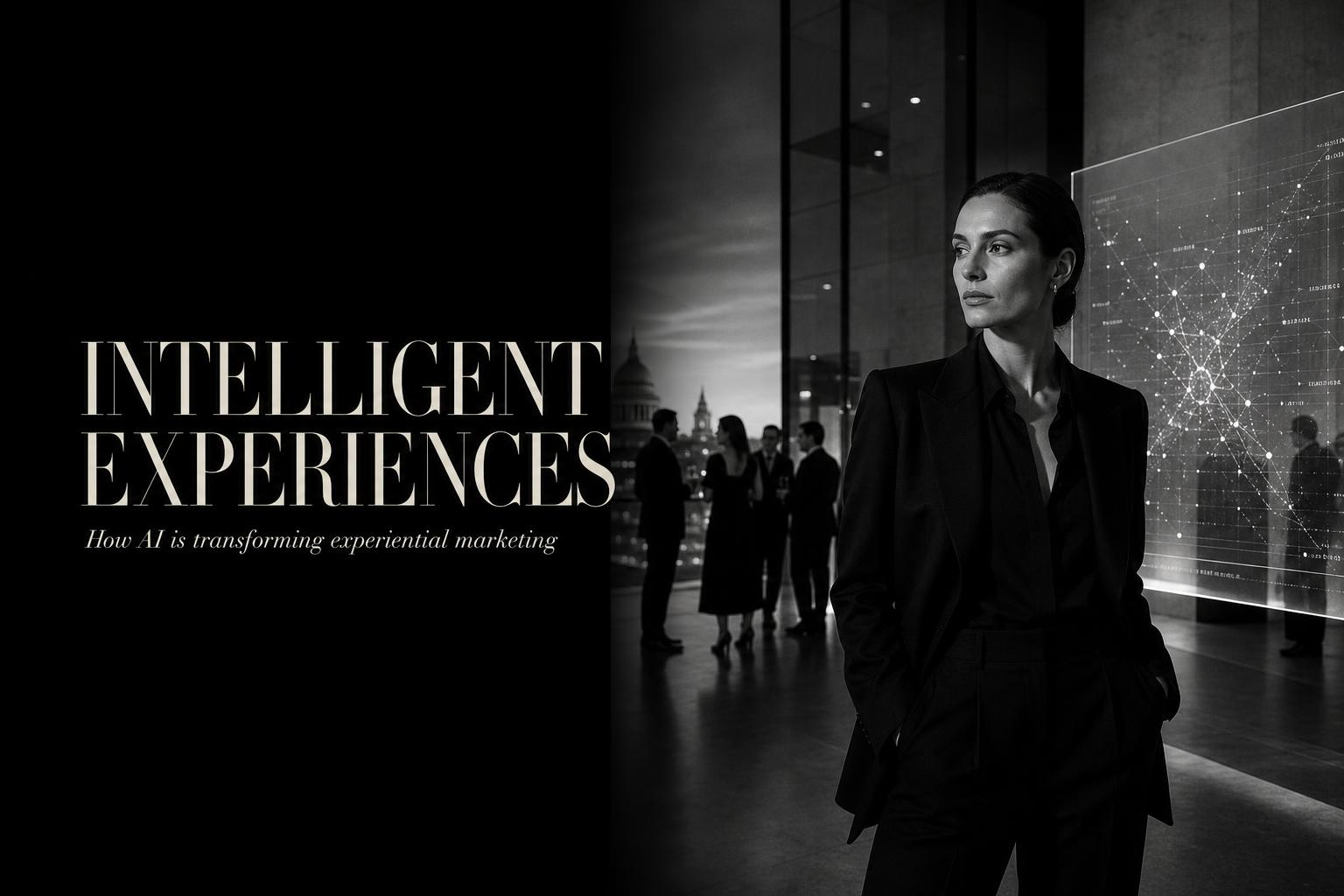
Artificial intelligence is reshaping how UK brands design, staff and deliver experiential activations. Here is how AI integrated experiences, premium brand ambassadors and immersive technology are defining the next era of customer engagement.
Experiential marketing in the UK is entering a new chapter. Artificial intelligence has moved from a backstage utility to a defining creative force — shaping how brands design activations, personalise moments and measure the emotional impact of every consumer interaction. At the centre of it all remains something distinctly human: the calibre of the people representing the brand.
At Staff Playbook, we work with some of the country's most ambitious brands and most polished experiential talent. What we are seeing across 2026 is unmistakable — the UK's leading marketers are no longer choosing between technology and hospitality. They are fusing them into a single, cinematic experience.
The rise of AI integrated experiences
AI integrated experiences describe activations where artificial intelligence is woven directly into the physical environment — not as a novelty, but as the connective tissue between the brand, the space and the customer. Think computer-vision installations that respond to a guest's mood, generative content walls that render bespoke visuals in real time, and conversational interfaces that brief brand ambassadors seconds before a VIP arrives.
The result is an experience that feels effortlessly personal. Two visitors can walk into the same activation and leave with two entirely different memories — both authentic, both on-brand.
The shift is significant. Where once experiential marketing measured success in footfall and photos, brands now expect measurable outcomes: dwell time, sentiment, first-party data capture, on-site conversion, and downstream lifetime value.
Why the UK is leading the charge
London has always been an experiential capital, but the wider UK — Manchester, Edinburgh, Birmingham, Bristol, Leeds — is now producing some of the most sophisticated AI-driven brand activations in Europe. Three forces are accelerating this.
A concentration of creative talent
British agencies, production studios and event architects have long been globally respected. The addition of AI-native creative teams has produced a rare combination — craft, taste and technical fluency in the same room.
A discerning consumer
UK audiences reward taste and punish gimmicks. That standard has forced brands to deploy AI where it genuinely enhances the experience, not where it merely decorates it.
Premium talent infrastructure
The final ingredient — often the quietest — is people. Even the most beautifully engineered AI activation lives or dies by the humans representing the brand on the day.
"Technology sets the stage. Talent delivers the performance. The brands winning in 2026 understand that both must be exceptional."
Where AI is showing up in experiential marketing right now
Across the campaigns we support, five patterns are emerging consistently.
1. Personalised retail experiences
AI retail experiences are turning flagship stores into responsive environments. Product recommendations, lighting, audio and even in-store scent are adapting to individual customers in real time — while brand ambassadors receive discreet prompts that help them tailor conversation without ever feeling scripted.
2. Generative content activations
Live generative installations create bespoke posters, portraits, playlists or short films for each guest. The output becomes the takeaway — an artefact that travels far beyond the activation on social channels.
3. Predictive staffing and crowd flow
Behind the scenes, AI models forecast footfall, queue times and peak demand. Event managers can rebalance premium brand ambassadors across zones before a bottleneck forms — protecting the experience for every guest.
4. Real-time sentiment measurement
Anonymised computer vision and post-interaction feedback loops give brands live sentiment reads. Campaigns can be adjusted mid-run, not audited weeks later.
5. AI-assisted brand ambassadors
The most quietly transformative shift. Ambassadors arrive fully briefed via intelligent pre-event platforms, receive live prompts during the activation, and debrief through structured AI-assisted reporting. The result is a level of consistency that used to be reserved for flagship openings — now available across every touchpoint of a national tour.
The one thing AI cannot replicate
For all its power, artificial intelligence cannot replace presence. It cannot replicate the warmth of a genuinely charismatic host, the confidence of a well-trained brand ambassador, or the instinctive judgement of an event manager who has read the room.
AI amplifies talent. It does not substitute for it. The brands producing the most talked-about experiential moments in the UK are the ones investing simultaneously in world-class technology and world-class people. Cut either corner and the illusion collapses.
This is why the future of experiential marketing is not "human vs machine". It is a carefully orchestrated partnership — technology handling the invisible complexity, and premium talent handling every visible moment.
Experiential marketing trends UK brands should be planning for in 2026
- Hybrid physical-digital storytelling — where the activation continues on the customer's phone long after they leave the venue.
- AI-personalised VIP journeys — bespoke routes through an event, adjusted live based on guest preferences.
- Ethical and transparent AI — clear signalling to guests when AI is being used, protecting trust and brand equity.
- Sustainable production — AI-driven logistics reducing waste, transport and over-production.
- Talent-first activations — brands leading with the calibre of the people on the floor, then designing technology around them.
Key takeaways
- AI integrated experiences are becoming the default standard for premium UK brand activations.
- The strongest campaigns pair intelligent technology with exceptional human talent — never one without the other.
- Personalisation, real-time sentiment and predictive staffing are the highest-impact use cases right now.
- UK brands that invest in both AI capability and premium brand ambassadors will define the next era of experiential marketing.
- Choosing an event staffing platform built around quality — not volume — is the fastest way to unlock this standard.
How Staff Playbook fits in
Staff Playbook is the UK's premium platform for experiential marketing talent and brand activation staffing. We work with leading brands, agencies and production teams to deliver polished, professional and reliably exceptional people — the calibre that AI-integrated experiences demand.
Every talent on our roster is vetted, trained and represented with the same care a luxury brand gives its own campaigns. From flagship product launches in London to national retail tours across the UK, we help brands cast, brief and manage the human layer of their most ambitious activations.
If you are building the next generation of AI-driven experiential marketing, we would like to hear about it.
Join Staff Playbook
For brands and agencies: discover how Staff Playbook connects you with the UK's most polished experiential talent for your next AI-integrated activation. Speak to our team or get in touch.
For experiential talent: if you are a brand ambassador, host, event manager or promotional professional ready to represent the UK's leading brands, apply to join the Playbook.
The future of experiential marketing belongs to brands and talent who refuse to compromise on quality. Staff Playbook exists to raise that standard.